* Parkeren *
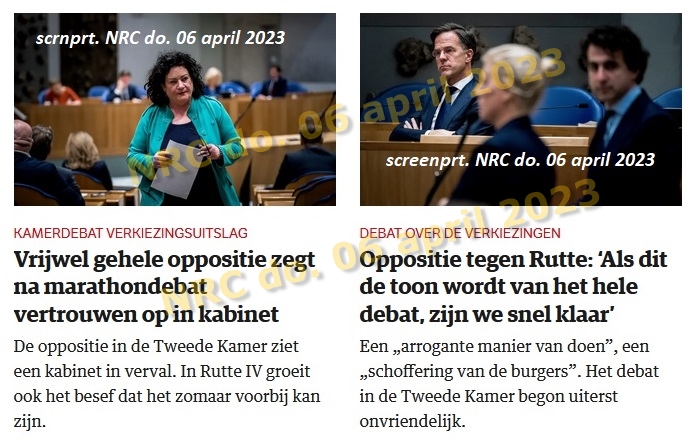
‘ Ze hebben dus weer geen flikker gedaan, hè, die Haagse Kaasstolpers …’
– ‘Comme d’habitude, mon cher, comme d’habitude …Wie doet ze wat, nietwaar? Zo’n 10.000 euro per maand op de giro, hatsjekiedééé‘!’
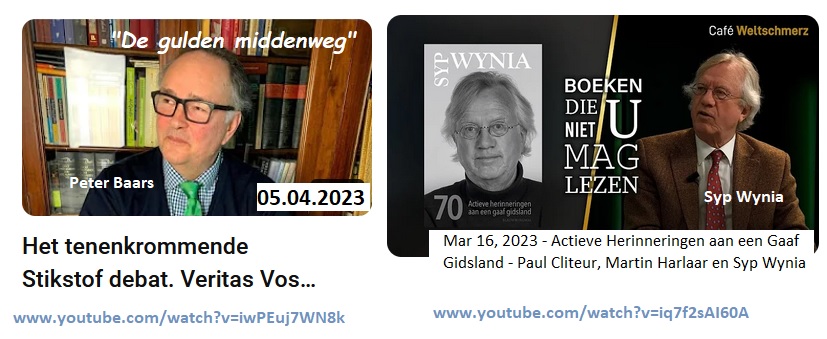
Mar 16, 2023 – Actieve Herinneringen aan een Gaaf Gidsland
*
‘ Actieve herinneringen, dat actieve is belangrijk,’
– ‘ Actieve herinneringen versus het geen-actieve-herinnering-hebben-aan. De cynische mantra van meneer Rutte. Uiteindelijk is die vorm van ondermijning (de vis rot aan de kop) de hoofdoorzaak van de huidige politieke malaise in Nederland. Het is zelfs tot officiële staatsdoctrine verheven. Kun je nagaan. Structureel en persistent pontificaal liegen – zeker in die positie – is een effectief langzaam werkend gif voor de maatschappij, want steeds meer “ondernemende” types komen in de verleiding hun slag te slaan, de medemens een poot uit te draaien, en vervolgens glashard te beweren dat zij “geen actieve herinneringen” aan hun wandaden hebben – indien ze al gepakt worden. De minister president doet het toch ook? En die komt er steeds mee weg, en hij vervalt van kwaad tot erger. Dus waarom zou ik me aan de code van een sociaal contract moeten houden?’

‘ Tja, helaas, zo is dat. En dan die knullige kaasstolpers achter de microfoon, die sulletjes wéten dat ze door Rutte worden belogen en bedonderd, maar ze zijn o zo bang voor hun baantje, dus verder dan ritueel blazen en symbolisch keffen komen ze niet. Het is weinig verheffend.
Ik vrees dat die fijnzinnige humor van Wynia het gros van de massa zal ontgaan …. ook Cliteur had het niet meteen door, geloof ik. Actieve herinneringen, herinneringen die je naar believen op non-actief kunt zetten.’
………………. …………………. ………………….
@@@@@@@@@@ @@@@@@@@@@@@
* citaat uit het boek van Stephen Walt * : When a bipartisan chorus of foreign policy professionals denounced Donald Trump’s candidacy during the 2016 campaign, Trump fired back promptly, calling them “nothing more than the failed Washington elite looking to hold onto their power, and it’s time they were held accountable for their actions.” Their concerns about Trump may have been valid, but so was his depiction of an out-of-touch community of foreign policy VIPs whose unthinking pursuit of liberal hegemony had produced few successes and many costly failures.
In a perfect world, the institutions responsible for conducting or shaping U.S.foreign policy would learn from experience and improve over time. Policies that worked poorly would be abandoned or revised, and approaches that proved successful would be continued. Individuals whose ideas had helped the United States become stronger, safer, or more prosperous would be recognized and rewarded, while officials whose actions had repeatedly backfired would not be given new opportunities to fail. Advisors whose counsel proved sound would rise to greater prominence; those whose recommendations were lacking—or, worse yet, disastrous—would be marginalized and ignored.
This notion may sound idealistic, but it is hardly far-fetched. Any organization striving to succeed must hold its members—especially its leaders— accountable for results. No corporation seeking to stay in business would stick with a management team that never met a quarterly target, and no baseball team would keep the same manager and lineup after finishing dead last five years running. In a competitive world, holding people accountable is just common sense.
But it doesn’t work this way in American politics, and especially not in foreign policy. Instead, failed policies often persist and discredited ideas frequently get revived, while error-prone experts “fail upward” and become more influential over time.
The lessons drawn from past experience may also be discarded when policymakers believe that new knowledge, a new technology, or a clever new strategy will allow them to succeed where their predecessors failed. As Ken Rogoff and Carmine Reinhart showed in their prizewinning book This Time Is Different: Eight Centuries of Financial Folly, economists and financial professionals have repeatedly (and wrongly) concluded that they had devised new and foolproof ways to prevent financial panics, only to be surprised when the next one occurred.
[B]ad ideas persist when powerful interests have an incentive to keep them alive. Although open debate is supposed to weed out dubious notions and allow facts and logic to guide the policy process, self-interested actors who are deeply committed to a particular agenda can interrupt this evaluative process. As Upton Sinclair once quipped, “It is difficult to get a man to understand something when his salary depends on his not understanding it.”
The ability of self-interested individuals and groups to interfere in the policy process appears to be getting worse, in good part because of the growing number of think tanks and “research” organizations linked to special interests. * * *
Stephen M. Walt (2018)The Hell of Good Intentions: America’s Foreign Policy Elite and the Decline of U.S. Primacy E-book ISBN: 978-0-374-71246-4 (het citaat is geredigeerd; vet toegevoegd)
Portions of this book originally appeared, in slightly different form, in Foreign Affairs and Chaos in the Liberal Order: The Trump Presidency and International Politics in the Twenty-First Century.