* Parkeren *
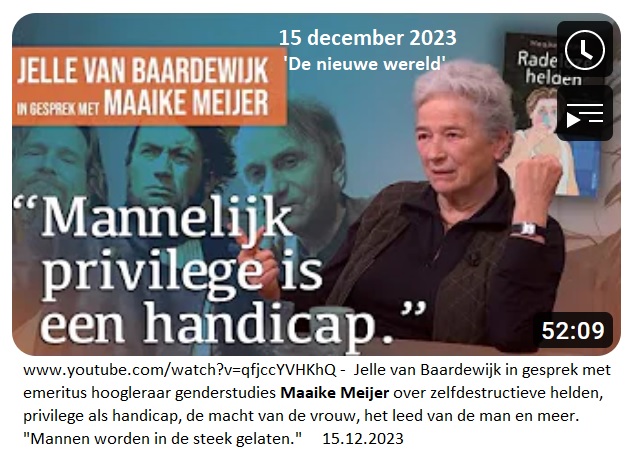
Dec 15, 2023 – Jelle van Baardewijk in gesprek met emeritus hoogleraar genderstudies Maaike Meijer over zelfdestructieve helden, privilege als handicap, de macht van de vrouw, het leed van de man en meer. “Mannen worden in de steek gelaten.”
*
‘ Zij vertelt het leuker dan ik me de film herinner. Misschien moet ik de fim daarom maar niet nog een keer bekijken. Ik heb overigens niet deze hele video bekeken, maar vanaf >>> 33:50 als M.M. over Lebowski vertelt. Maar inderdaad: “’t Is een leuk mens” en ze vertelt smakelijk over literatuur. Heb jij haar laatste boek – Radeloze helden – gelezen?’
- ` Niet helemaal, maar ik heb mijn nichtjes elk een exemplaar gegeven, zodat ze weer iets over romanpersonages lezen en misschien verder gaan in de literatuur. Hoewel ze gelukkig meer lezen dan de meeste jongelui die ik ken. Osewoudt van WFH kent bijna iedereen, maar Michael Kohlhaas van Kleist toch echt niet.’
‘ Komt Lord/Tuan Jim (vertaling) van Conrad ook aan bod? Een bijna archetypische loser, die voor het Britse Imperium en zijn verpietering staat.’
- ‘ Neen, en Billy Budd geloof ik ook niet, hoewel die vanwege de ambiguie homoseksualiteit (zie Barbara Johnson) toch interessant is. Wel Moby Dick, maar ik moet het boek nogeens grondig lezen.’
‘Met Tuan Jim heb je meteen de koloniale reutemeteut bij de kladden. Is Douwes Dekker eigenlijk niet ook een loser? Hij kon wel schrijven. Staat die Kohlhaas niet symbool, metafoor, voor teugelloos (hengsten) testosteron, de mannelijke libido, die overloopt en amok maakt? Ik herinner me nog een paar “zachte” mannen bij Roth. Zal ze op een rijtje zetten. De jongelui vragen om inspiratie.’
…………. ……………… ……………….. …………………..
…………. ………………. ……………….. ………………………
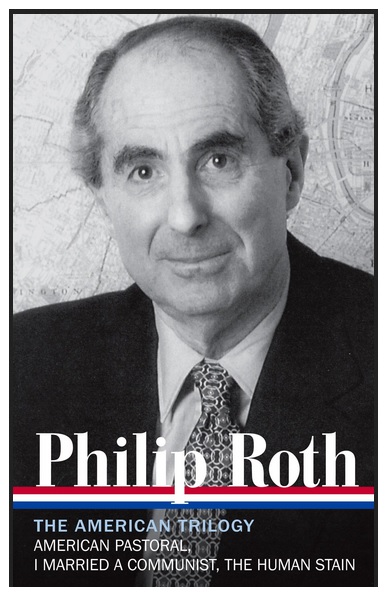
De drie anti-helden bij Roth, in deze trilogie zijn:
Seymour “Swede” Levov, de protagonist uit American Pastoral (1997)
Iron Rinn (born Ira Ringold), protagonist uit I Married a Communist (1998)
Coleman Silk, uit The Human Stain (2000)
…………. ……………… ………………
*
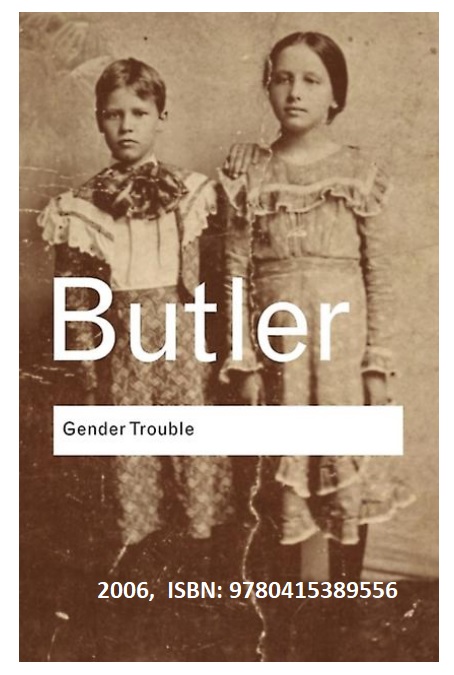
Citaat uit Judith Butler (2006; cursief in het origineel, vet extra toegevoegd).
% citaat % Perhaps the problem is even more serious. Is the construction of the category of women as a coherent and stable subject an unwitting regulation and reification of gender relations? And is not such a reification precisely contrary to feminist aims? To what extent does the category of women achieve stability and coherence only in the context of the heterosexual matrix? If a stable notion of gender no longer proves to be the foundational premise of feminist politics, perhaps a new sort of feminist politics is now desirable to contest the very reifications of gender and identity, one that will take the variable construction of identity as both a methodological and normative prerequisite, if not a political goal.
To trace the political operations that produce and conceal what qualifies as the juridical subject of feminism is precisely the task of a feminist genealogy of the category of women. In the course of this effort to question “women” as the subject of feminism, the unproblematic invocation of that category may prove to preclude the possibility of feminism as a representational politics. What sense does it make to extend representation to subjects who are constructed through the exclusion of those who fail to conform to unspoken normative requirements of the subject? What relations of domination and exclusion are inadvertently sustained when representation becomes the sole focus of politics? The identity of the feminist subject ought not to be the foundation of feminist politics, if the formation of the subject takes place within a field of power regularly buried through the assertion of that foundation. Perhaps, paradoxically, “representation” will be shown to make sense for feminism only when the subject of “women” is nowhere presumed. %% einde citaat %%